

Your Oil Questions Answered
Today’s engines are quite a bit different than engines in the past. They need less maintenance, are more powerful, and need less fuel. Since they don’t require as much maintenance as older engines, oil changes have become even more important for keeping your engine in good shape. All oil used today is “paraffin-based” oil; this means it’s able to capture dirt. When you get your oil changed, we remove the old filter and drain the oil—and all the dirt goes with it.
We receive a lot of questions about motor oil; here are some of the most common questions and answers to help you understand this essential automotive fluid.
Can I Just Add More Oil to My Engine, Instead of Changing It?
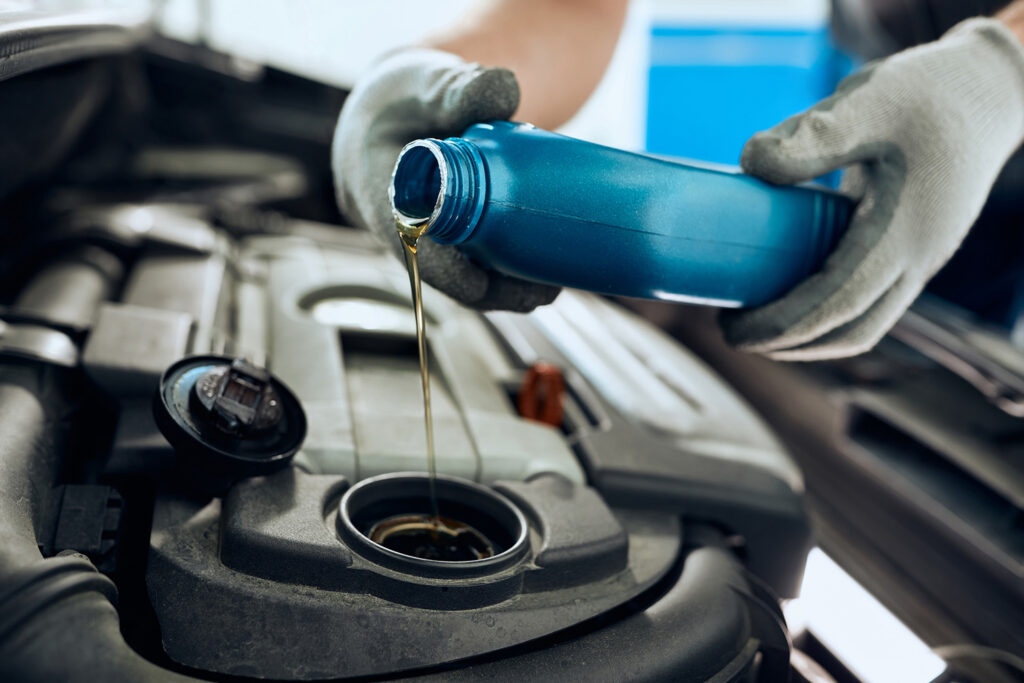
Although it might seem more economical to keep adding oil to your engine, it really isn’t. As mentioned above, one of the properties of oil is that it collects dirt, as well as byproducts from the combustion process.
Over time, these contaminants can make the oil thick and sludgy—which can damage your engine. The oil loses its ability to lubricate the moving parts of the engine, which can lead to friction, excessive wear, and overheating. If the sludge is thick enough, it can even clog the engine. Adding more oil instead of replacing it will also eventually impact the oil filter. The best way to extend the life of your engine is to get your oil changed regularly.
Does it Matter Which Type of Oil I Put in My Car?
The type of oil you put in your car definitely matters. You can find the type of oil you should use listed in your owner’s manual, or feel free to ask us. Although the brand doesn’t matter, the viscosity (or thickness) of the oil does. Oil that’s too thick or too thin won’t provide the right level of lubrication for your engine or be able to carry the heat away from it as well. The wrong type of oil can also decrease your gas mileage. Using the right type of oil will help your engine run smoothly and prevent the need for repairs.
What Do the Numbers and Letters Mean on the Oil Bottles?
The numbers and letters on oil bottles provide information about the weight of the oil. Let’s use 5W-30 as an example. The “5” and “30” measure the viscosity of the oil at different temperatures; the “W” stands for winter. This oil has a viscosity of 5 when it’s cold and a viscosity of 30 when the oil is hot. This means the oil will flow well at low temperatures, but still provide good protection for the engine at high temperatures. An oil with a weight of 0W-30 will work even better at lower temperatures. Most cars today use either 5W-20 or 5W-30, regardless of their geographic location.
What Are the Signs of Low Engine Oil?
The most obvious sign of low engine oil is a lit oil pressure warning light on the dashboard. Other signs include the odor of burning oil, sluggish performance, clunking or grinding noises coming from the engine, or overheating.
How Often Should I Get an Oil Change?
This can vary depending on the age of your vehicle, the type of oil it uses, and your typical driving conditions. In the past, the recommendations were to change the oil every 3,000 miles; today, oil change intervals are typically between 5,000 to 7,000 miles—although some vehicles have recommendations as far between as every 15,000 miles. In your owner’s manual, you’ll find recommendations for “normal” operation and “severe service.” The severe service schedule is more frequent, and is recommended if you drive your car under one or more of the following conditions:
- Mostly short trips of 5 miles or less
- Extremely cold, hot, or dusty climates (Yuma County falls into the Severe Service category)
- Sustained stop-and-go driving
- Towing a trailer or carrying heavy loads
If you’re not sure whether you fall into the normal operation or severe service schedule, talk to your service advisor.
Can I Switch to Synthetic Oil?
In most cases, it’s ok for vehicles to switch to synthetic oil, but it’s important to talk to your service advisor first. Not all engines are designed to handle them. If your engine can handle synthetic oil, switching could be a smart move. Synthetic oil is ideal for engines that run hotter; it also has fewer impurities than conventional oil—which helps it clean your engine better, improves fuel economy, and prevents harmful engine sludge.
For more answers to your oil questions, or to schedule an oil change, contact Accurate Automotive Attention today in Central Yuma or The Foothills!